


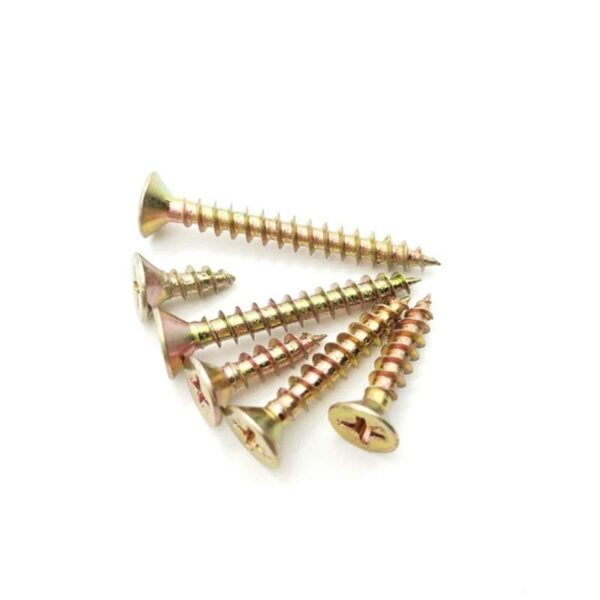
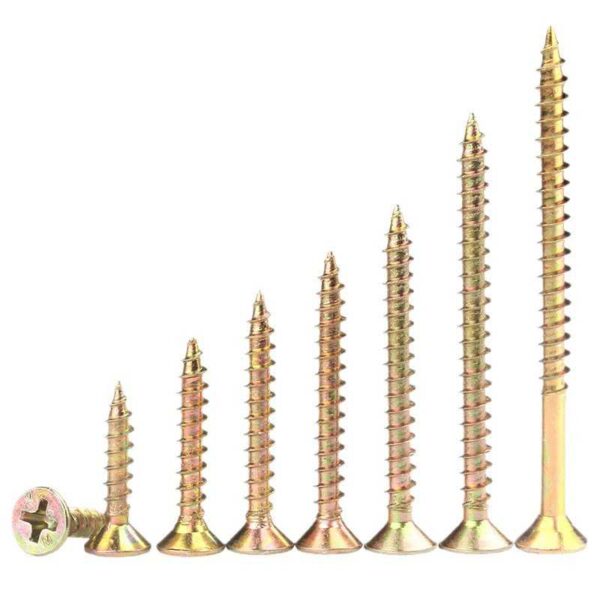
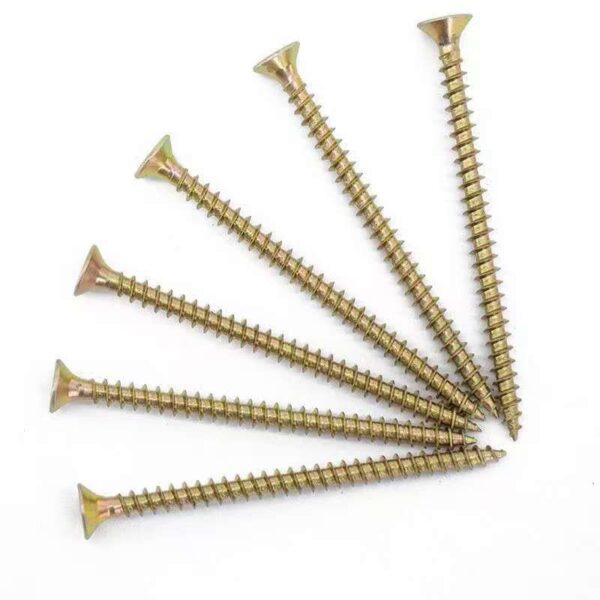
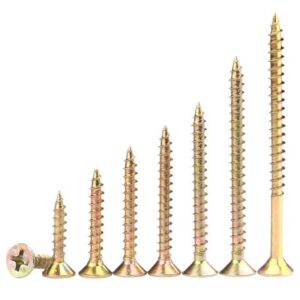
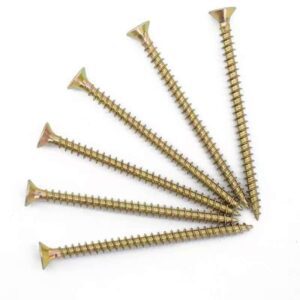
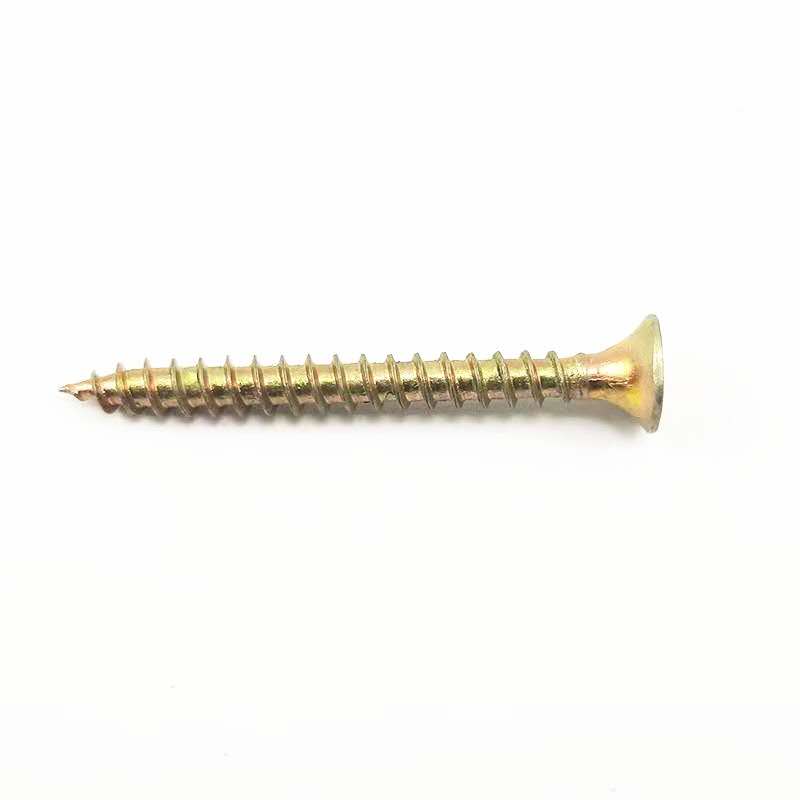
High Quality Wood Furniture and Cabinet Making Chipboard Screws Self-Tapping Coarse Thread Yellow Zinc Plated Finish
0 out of 5
Categoria: Machined Screws
Etiquetas: cnc machined screw, cnc machined screws, cnc machining screw, cnc machining screws, cnc screw, cnc screws, custom screw, custom screws, flat headed wood screws, machined screw, machined screws, machining screw, machining screws, self drilling wood screws, special screw, special screws, stainless steel wood screws, wood screws
- Descrição
- Avaliações (0)
Descrição
What are Chipboard Screws?
Chipboard screws are a type of self-tapping wood screw specifically designed for use in particle board, chipboard, MDF (Medium-Density Fiberboard), and other composite wood materials. They are characterized by a sharp point for immediate starting and a coarse, deep thread that provides excellent holding power in soft, fibrous materials without splitting them. Most chipboard screws feature a countersunk head with a cross drive (usually Pozidriv or Phillips), allowing the screw to sit flush with the material’s surface.
Materials of Chipboard Screws
Chipboard screws are manufactured from various materials to balance strength, cost, and corrosion resistance:
| Material | Properties |
|---|---|
| Carbon Steel | The most common material. High tensile strength, cost-effective. Usually heat-treated for added durability. |
| Stainless Steel | Excellent corrosion resistance. Ideal for outdoor use, bathrooms, or marine environments. |
| Brass | Good corrosion resistance and aesthetic appeal. Often used in furniture where the screw head is visible. |
Surface Finishes
The finish affects both the screw’s appearance and its resistance to corrosion:
| Finish | Description | Application |
|---|---|---|
| Zinc Plated (Bright Zinc) | Silver-gray appearance. Basic corrosion protection for indoor use. | Furniture, cabinets, indoor joinery. |
| Yellow Zinc Plated | Gold/yellowish tint. Slightly better corrosion resistance than bright zinc. | General woodworking, imported furniture. |
| Black Phosphate | Matte black finish. Provides mild corrosion resistance and good lubricity. | Automotive interiors, electronic enclosures. |
| Electroless Nickel | Shiny, hard surface. Excellent corrosion and wear resistance. | High-end furniture, precision equipment. |
| Geomet®/Dacromet® | Silver-gray, water-based coating. High corrosion resistance without hydrogen embrittlement. | Outdoor construction, industrial applications. |
Specifications
When selecting chipboard screws, the following specifications are critical:
1. Drive Type
Pozidriv (Pozi): The industry standard. Features additional ribs for reduced cam-out and better torque transfer.
Phillips: Common but more prone to slipping under high torque.
Torx (Star): Provides the best torque transfer and virtually eliminates cam-out.
2. Head Type
Countersunk: Designed to sit flush with or below the material surface.
Double Countersunk: Features an additional chamfer to reduce material splitting and improve flush finishing.
Wafer Head: A flat, slightly raised head, often used for attaching hinges or fixtures.
3. Thread Type
Full Thread: Threads run the entire length of the shaft. Maximum holding power.
Partial Thread: A smooth shank near the head allows for clamping two pieces together.
4. Dimensions
Diameter: Typically ranges from 3.0mm to 6.0mm. (e.g., 3.5mm, 4.0mm, 5.0mm)
Length: Typically ranges from 12mm to 100mm. (e.g., 16mm, 25mm, 40mm, 50mm)
Application Fields
Chipboard screws are ubiquitous in the woodworking and construction industries:
Furniture Manufacturing: Assembling flat-pack furniture, wardrobes, and desks.
Kitchen Cabinetry: Fixing hinges, assembling cabinet boxes, and attaching worktops.
Flooring: Securing chipboard flooring panels to joists.
Joinery: Fixing skirting boards, architraves, and window boards.
DIY Projects: General home improvement, shelving, and hobby woodworking.
Construction: Temporary or permanent fixing of wooden formwork and cladding.
An Excellent Case: Assembling a Flat-Pack Kitchen Cabinet
Scenario:
A homeowner purchases a flat-pack kitchen base cabinet made from 18mm melamine-faced chipboard. The cabinet includes sides, a bottom, a back panel, shelves, and hinge mounting plates.
The Challenge:
Standard wood screws might split the chipboard or fail to grip adequately. The melamine coating is slippery, and the particle board core is dense yet brittle.
The Solution:
Using high-quality 4.0 x 50mm Double Countersunk Chipboard Screws with a Pozidriv drive.
The Process:
Preparation: The cabinet sides are pre-drilled with pilot holes (as per standard flat-pack construction) to ensure precise alignment.
Assembly:
The assembler uses an electric screwdriver fitted with a PZ2 Pozidriv bit.
The sharp point of the screw engages immediately in the pilot hole without needing to pre-start it.
The coarse thread cuts cleanly into the chipboard, compressing the fibers for a tight grip rather than blowing out the material.
As the screw seats, the double countersunk head compresses the melamine surface slightly, creating a clean, flush finish without the “mushrooming” effect common with inferior screws.
Final Installation:
The same type of screws, in a shorter length (4.0 x 16mm), are used to attach the metal hinge plates to the cabinet side. The screws hold securely in the chipboard, ensuring the cabinet doors remain aligned and functional for years.
Why This Case is “Excellent”:
Efficiency: The self-tapping nature and Pozidriv drive allow for fast assembly without bit slippage.
Durability: The hardened steel screw and deep thread ensure the cabinet structure remains rigid over time.
Aesthetics: The double countersunk head provides a professional, flush finish, which is crucial for visible furniture.
Reliability: The hinge fixings remain secure, preventing doors from sagging—a common failure point in cheap flat-pack furniture.

Avaliações
Ainda não existem avaliações.