


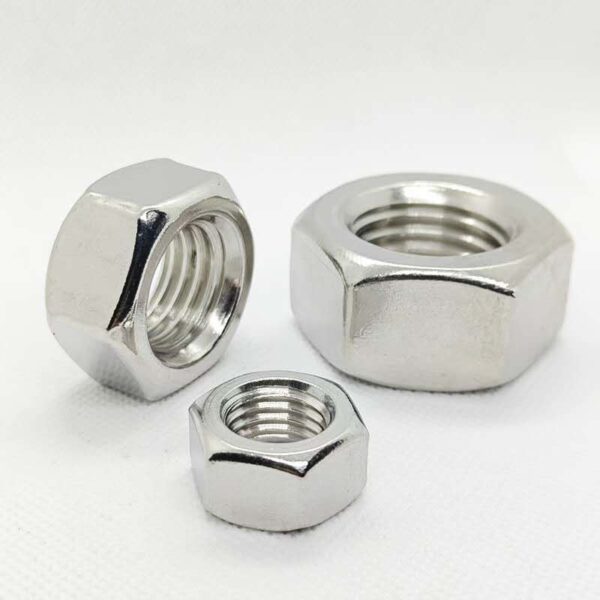


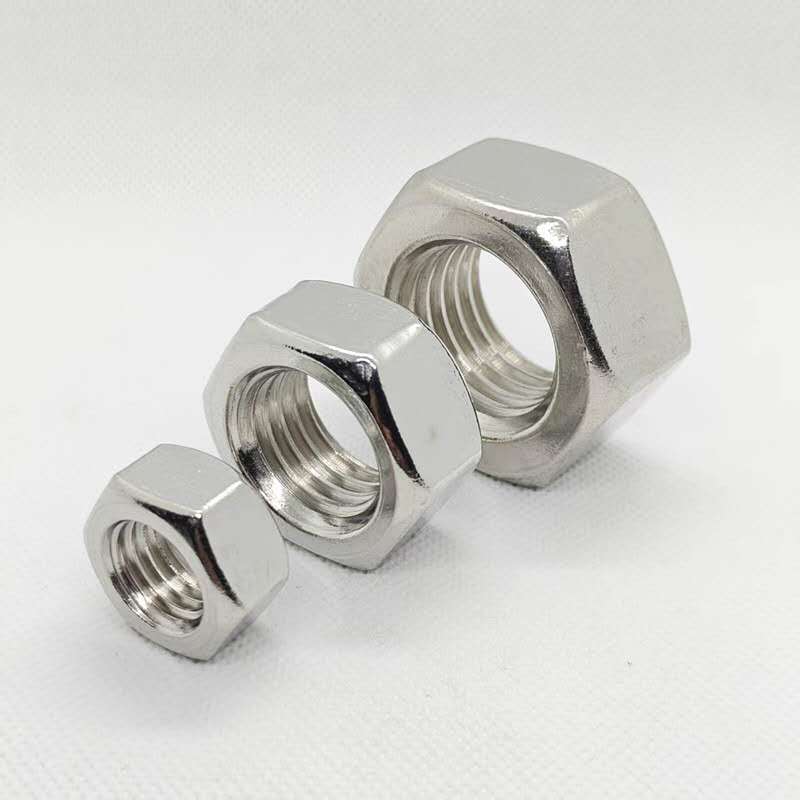
Industrial Quality All Metal Lock Nuts Corrosion Resistant Vibration-Proof Hex Nuts

0 out of 5
Industrial Quality All Metal Lock Nuts Corrosion Resistant Vibration-Proof Hex Nuts
Categoria: Machined Nuts
Etiquetas: CNC Machined Nuts, CNC Machining Nuts, M10 Lock Nut, M12 Self Locking Nut, M6 Lock Nut, M8 Lock Nut, machined nut, Machined Nuts, machining nut, Machining Nuts, special nut, Special Nuts
- Descrição
- Avaliações (0)
Descrição
What are All Metal Lock Nuts?
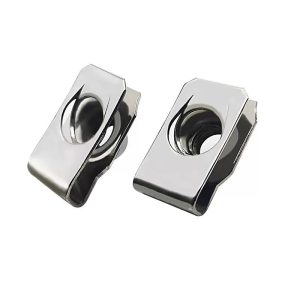
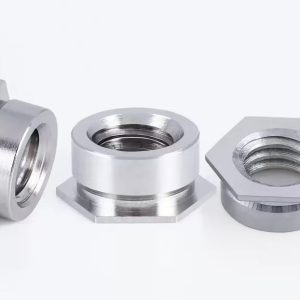
All Metal Lock Nuts, also known as all-metal prevailing torque nuts, are a type of fastener designed to resist loosening under vibration and torque. Unlike standard nuts that rely on a separate washer (like a nylon insert lock nut), all-metal lock nuts achieve their locking ability through a mechanical deformation of the nut itself.
The top portion of the nut is intentionally distorted out of a true round shape (often elliptical or with a crimped section). When the mating bolt is threaded into this distorted section, the metal of the nut is forced to elastically conform to the round shape of the bolt. This creates a strong, consistent clamping force and friction between the threads, which prevents the nut from spinning free due to vibration. Because they are made entirely of metal, they are suitable for high-temperature applications where nylon inserts would melt.
Materials of All Metal Lock Nuts
All Metal Lock Nuts are manufactured from various materials to suit different strength and environmental requirements:
Carbon Steel: The most common material, often heat-treated for high strength (e.g., Grade 8).
Stainless Steel (304 & 316): Offers excellent corrosion resistance, making it ideal for marine, chemical, and outdoor applications.
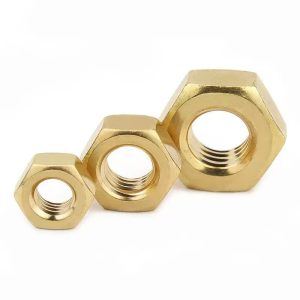
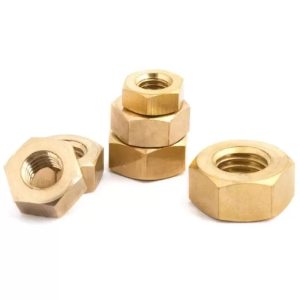
Brass: Used for electrical applications due to its non-magnetic and conductive properties, as well as for decorative purposes.
Aluminum: Chosen for applications where weight savings are critical, such as in aerospace.
Surface Finishes of All Metal Lock Nuts
The finish is applied to protect against corrosion and sometimes for aesthetics:
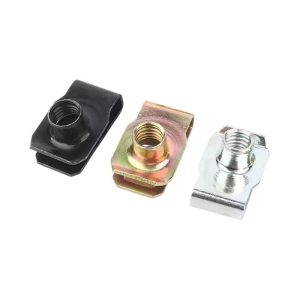
Plain/Black Oxide: A basic finish that offers minimal corrosion resistance but is often used in dry internal environments.
Zinc Plated: The most common finish for carbon steel, providing good corrosion resistance at a low cost.
Yellow Zinc (Dichromate): Offers higher corrosion resistance than clear zinc.
Hot Dip Galvanized: A thick coating for extreme outdoor corrosion protection.
Geomet/Dacromet: A solvent-free, water-based coating that provides excellent corrosion resistance without the risk of hydrogen embrittlement.
Passivated: A specific treatment for stainless steel to remove free iron and enhance the natural corrosion-resistant layer.
Specifications of All Metal Lock Nuts
All Metal Lock Nuts are defined by several dimensional and performance standards:
Thread Type:
Metric (e.g., M3, M4, M6, M8, M10, M12): Defined by standards like DIN 980 (now replaced by ISO 7042) and ISO 10513.
Imperial/Unified (e.g., 1/4-20, 5/16-18, 3/8-16): Defined by standards like ASME B18.16.6 and military specifications like MS21045 (for the elliptical type).
Styles:
Elliptical Offset (Top Lock): The top threads are squeezed into an elliptical shape (e.g., Stover Nuts).
Crimped (Beam Type): Slots are cut into the top, and the resulting beams are deflected (e.g., Flexloc Nuts).
Strength Grades:
Metric: Usually Grades 8, 10, and 12.
Imperial: Usually Grades 2, 5, and 8.
Application Areas
Due to their high reliability and temperature resistance, all-metal lock nuts are used in critical applications where safety and durability are paramount:
Automotive: Engine components (exhaust manifolds), suspension systems, and drivetrain assemblies.
Aerospace: Engine mounts, airframe structural connections, and landing gear assemblies.
Railways: Track fastening systems and undercarriage components.
Industrial Machinery: High-vibration equipment like pumps, compressors, and presses.
Construction & Heavy Equipment: Connections on excavators, cranes, and bulldozers.
An Excellent Case: Automotive Exhaust System Mounting
Scenario: A passenger vehicle’s exhaust system is connected to the engine’s exhaust manifold. The joint experiences extreme temperature fluctuations (from cold start to over 600°C) and constant vibration from the engine and road.
Problem: A standard nut with a nylon insert (Nyloc) cannot be used here because the high exhaust temperatures would melt the nylon ring, causing the nut to lose its locking ability and potentially loosen over time, leading to an exhaust leak. A standard nut without any locking feature would vibrate loose even faster.
Solution: The engineer specifies an M10 x 1.5 Class 8 All Metal Lock Nut with a Zinc Flake coating (Geomet).
Why All Metal: The steel-on-steel prevailing torque mechanism withstands the extreme exhaust temperatures without degrading, ensuring the nut stays tight.
Why Class 8: This grade provides sufficient strength to clamp the heavy exhaust components securely without galling or failing.
Why Zinc Flake Coating: This thin coating provides excellent corrosion resistance against road salt and water spray while being thin enough to maintain the precise thread tolerances required for the locking feature to work correctly.
Result: The all-metal lock nut maintains a consistent clamp load over thousands of heat cycles and miles of vibration, preventing exhaust leaks, reducing noise, and ensuring the safety of the vehicle’s exhaust system.
Avaliações
Ainda não existem avaliações.