


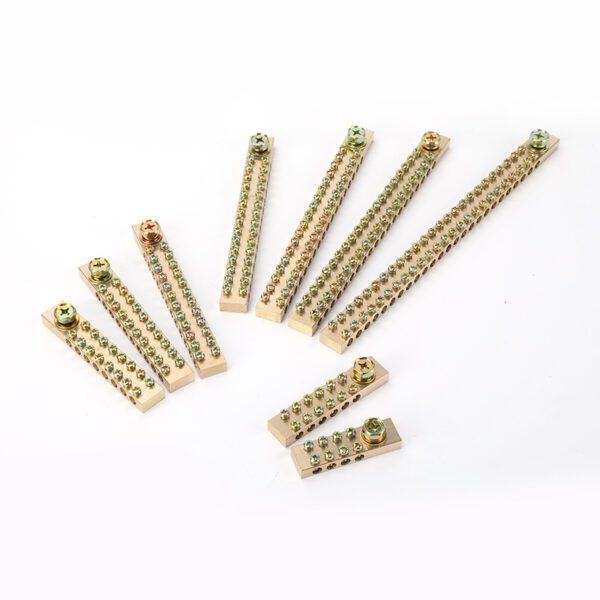
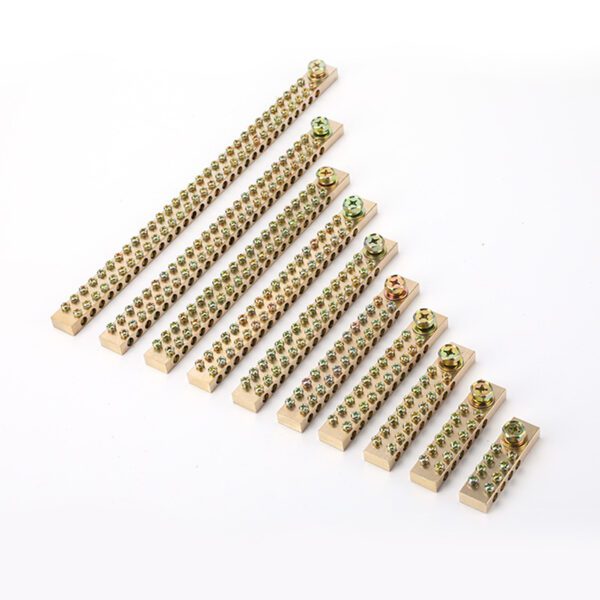
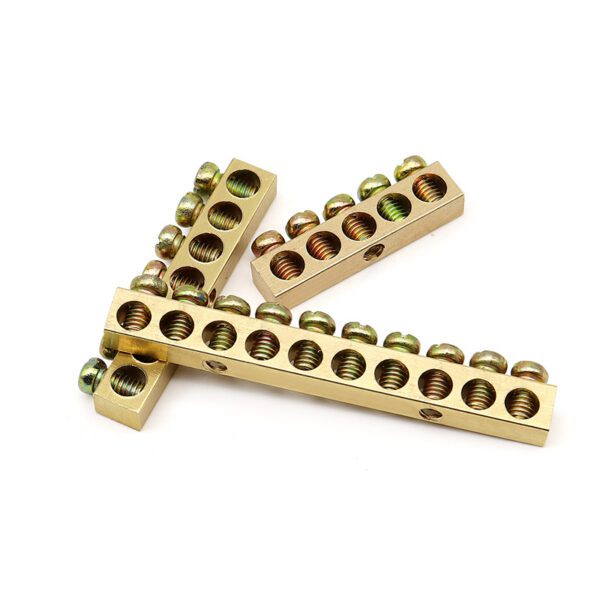

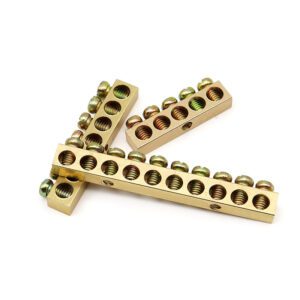
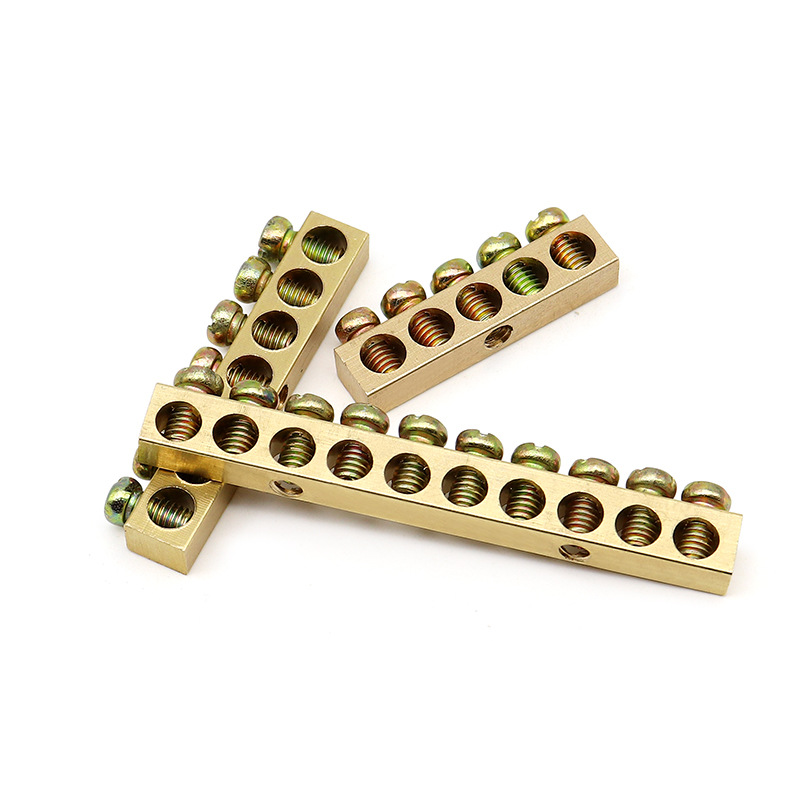
Tin-Plated Brass Barrier Strip 2 4 6 8-Pole High-Conductivity Terminal Block for OEM Customization
Tin-Plated Brass Barrier Strip 2 4 6 8-Pole High-Conductivity Terminal Block for OEM Customization
- Description
- Reviews (0)
Description
What is a Barrier Strip?
A barrier strip, also known as a barrier terminal block, is a screw-type electrical connector featuring multiple terminals arranged in a row with raised insulating walls (barriers) between each connection point . These barriers prevent adjacent wires from contacting each other, reducing short-circuit risk and providing organized, isolated connections for multiple circuits .
Material
Terminal (Conductor): Brass or copper alloy for high conductivity and mechanical strength .
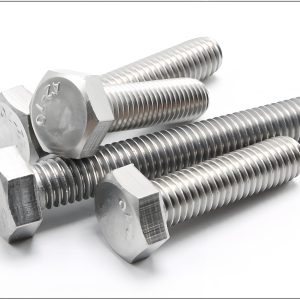
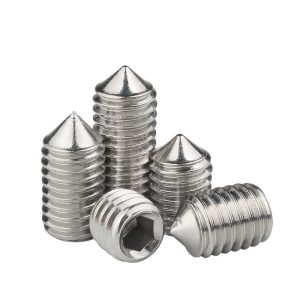
Screw / Fastener: Steel, typically nickel-plated or zinc-plated for corrosion resistance. Common sizes include M3, M3.5, #6-32 .
Housing (Insulator): Thermoplastic materials such as polyamide (PA66) or black thermoplastic. Must meet UL 94 V-0 flammability rating for self-extinguishing properties .
Surface Finishes
Tin Plating: Applied to brass terminals to prevent oxidation, maintain solderability, and ensure low contact resistance .
Nickel Plating: Used on steel screws for enhanced corrosion protection and durability .
Specifications
Pitch (Center-to-Center Spacing): 6.35mm to 17.46mm; common sizes include 9.53mm and 9.5mm .
Current Rating: Ranges from 10A to 65A depending on size and material; typical industrial rating is 20A .
Voltage Rating: 300V, 600V, or up to 750V for industrial applications .
Wire Range: 22 AWG to 12 AWG (common); some heavy-duty models accept larger gauges .
Temperature Range: -40°C to +105°C (standard); up to +120°C for high-performance variants .
Number of Circuits (Poles): 1 to 32 positions per strip .
Torque Rating: M3.5 screws typically rated at 0.8 Nm maximum .
Primary Applications
Industrial Control Panels: Organizes wiring for PLCs, motor controls, and variable frequency drives (VFDs) .
HVAC Systems: Connects thermostats, sensors, and control relays .
Power Distribution Units: Safely distributes power to multiple devices with isolated circuits .
Lighting Systems: Commercial and residential lighting fixture connections .
Telecommunications & Instrumentation: Filtered barrier strips for EMI/RFI suppression in sensitive equipment .
Best Practice Application Example
An MRO technician is wiring a new industrial control panel. A TE Connectivity 6-position double-row barrier strip, 9.53mm pitch, 20A, 300V is selected . The brass, tin-plated terminals accept 14 AWG stranded wire. The technician strips wires to 7mm, inserts each into its designated terminal, and tightens M3 steel nickel-plated screws to spec. The UL 94 V-0 thermoplastic housing and dual barriers prevent adjacent circuit contact. The closed-bottom design mounts directly to the panel. The finished panel meets NEC and UL 508A standards with organized, serviceable connections.





Reviews
There are no reviews yet.