


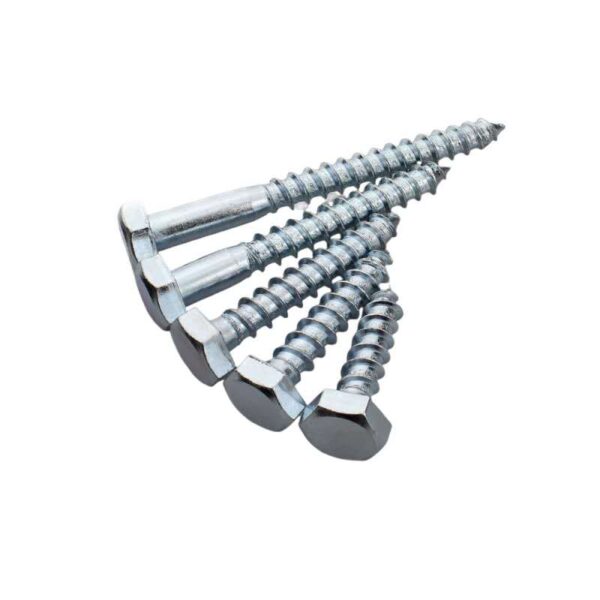
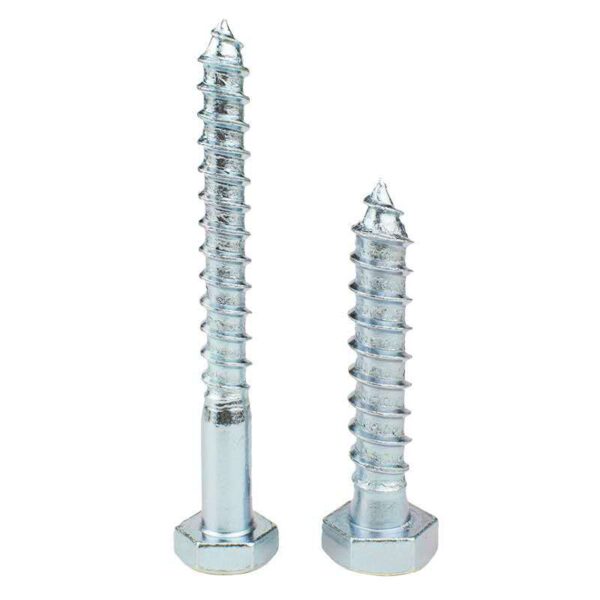
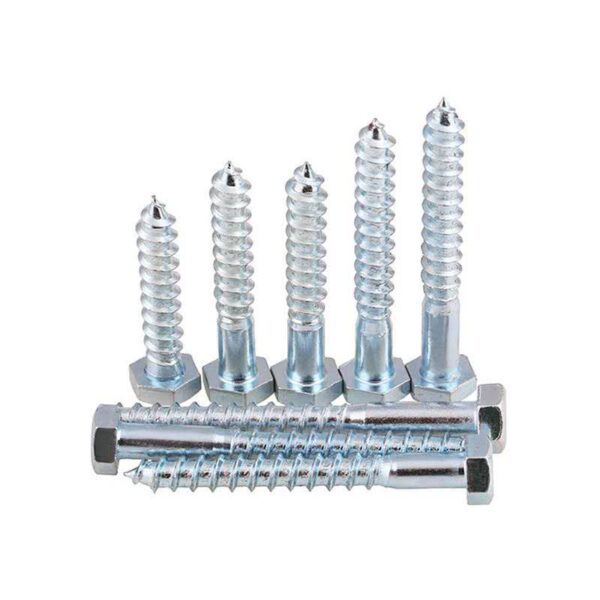

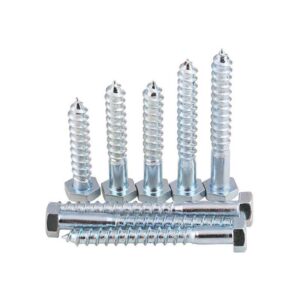
High Quality Heavy Duty Hex Head Lag Bolt Wood Screws Zinc Plated Carbon Steel Coarse Threads Sizes M6-M20
High Quality Heavy Duty Hex Head Lag Bolt Wood Screws Zinc Plated Carbon Steel Coarse Threads Sizes M6-M20
- Opis
- Opinie (0)
Opis
What is a Lag Bolt?
A Lag Bolt (also known as a Lag Screw) is a large, heavy-duty fastener used to join heavy timber or other materials that require a strong connection. Unlike a standard machine bolt, which requires a nut to secure it, a lag bolt is self-tapping and is driven directly into wood or other materials.
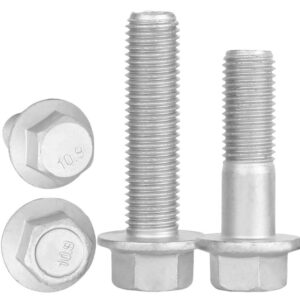
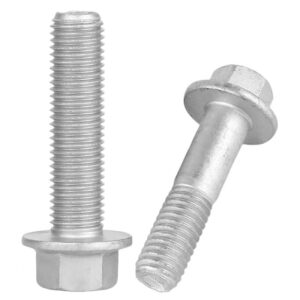
It features a hexagonal or square head designed to be driven with a wrench or socket (not a screwdriver), and a coarse, deep thread that provides excellent holding power. Because of its size and thread design, a pilot hole must typically be pre-drilled to prevent the wood from splitting.
Material
Lag bolts are manufactured from various materials depending on the strength and environmental requirements:
| Material | Properties | Common Use |
|---|---|---|
| Low Carbon Steel | Good tensile strength, economical, easy to coat. | General indoor construction, furniture assembly. |
| Medium Carbon Steel | Higher strength than low carbon steel. Often heat-treated for Grade 5 or Grade 8 ratings. | Heavy machinery mounting, structural steel connections to wood. |
| Stainless Steel (304/316) | Excellent corrosion resistance. 316 offers superior resistance to saltwater and chemicals. | Marine applications, outdoor decks, coastal construction, food processing equipment. |
| Alloy Steel | Contains chromium, molybdenum, or nickel for enhanced strength and durability. | High-stress applications, automotive, aerospace jigs. |
| Brass / Silicon Bronze | Corrosion resistant and non-sparking. Often used for aesthetic appeal. | Boat building, decorative timber framing, historical restorations. |
Surface Treatment
Surface treatments protect the bolt from corrosion and can also enhance appearance.
| Treatment | Description | Application |
|---|---|---|
| Plain / Black Oxide | Minimal corrosion resistance; provides a basic dark finish. | Indoor use only, light-duty applications. |
| Zinc Plated (Electro-galvanized) | A thin layer of zinc applied electrically. Offers moderate corrosion resistance. | General hardware, furniture, indoor construction. |
| Hot-Dipped Galvanized (HDG) | A thick zinc coating applied by dipping in molten zinc. Very high corrosion resistance. | Outdoor structures (decks, fences), utility poles, highway signs. |
| Mechanical Galvanizing | Zinc coating applied mechanically; used when hydrogen embrittlement is a concern. | High-strength steel bolts (Grade 8) for outdoor use. |
| Dacromet / Geomet | A non-electrolytic coating with excellent corrosion resistance and no hydrogen embrittlement. | Automotive under-hood components, high-end fasteners. |
| PTFE / Teflon Coating | Provides lubrication and chemical resistance. | Chemical plants, specialized industrial equipment. |
Specifications & Sizes
Lag bolts are available in both Imperial (inch) and Metric (millimeter) sizes.
Common Sizes
| System | Diameter Range | Length Range | Common Drive |
|---|---|---|---|
| Imperial (USA) | #10 (3/16″) to 3/4″ | 1″ to 6″ (or longer) | 5/16″ to 9/16″ Hex |
| Metric (DIN 571) | 5 mm to 20 mm | 20 mm to 200 mm | 8 mm to 24 mm Hex |
Key Parameters
Thread Type: Coarse, sharp threads designed for wood.
Standards:
USA: ASME B18.2.1
Metric: DIN 571 (Hexagon Head Wood Screws)
Strength Grades:
SAE J429 Grade 2 (Low carbon steel)
SAE J429 Grade 5 (Medium carbon steel, heat-treated)
SAE J429 Grade 8 (Medium carbon alloy steel, heat-treated)
Application Areas
Lag bolts are essential in construction and heavy assembly where standard screws are insufficient.
Timber Framing & Construction: Securing large wooden beams, posts, and rafters.
Decking & Fencing: Attaching ledger boards, fence rails, and heavy brackets.
Furniture Manufacturing: Assembling heavy wooden furniture, workbenches, and shelving units.
Mounting Hardware: Securing heavy equipment, brackets, and machinery to wooden floors or walls.
Automotive & Trailers: Attaching wooden bed liners to truck frames or wooden decks to utility trailers.
Marine & Docks: Building docks, piers, and other saltwater-exposed wooden structures (using stainless steel or bronze).
Playgrounds & Outdoor Structures: Building pergolas, gazebos, and swing sets.
Excellent Case Example
Project: Building a Heavy-Duty Wooden Deck
Situation:
A contractor is building a large residential deck. The main support structure involves attaching a double 2×12″ laminated ledger board to the side of a house. This ledger board will support the entire weight of the deck, so the connection must be extremely strong and secure.
Why Lag Bolts are the Right Choice:
Strength: Standard wood screws would not provide enough shear strength to hold the deck safely.
No Access for Nuts: Unlike a through-bolt (machine bolt), a lag bolt can be installed from the outside without needing access to the interior side of the house’s rim joist.
Holding Power: The coarse, deep threads of the lag bolt bite deep into the solid wood of the house’s rim joist, creating a powerful clamping force.
The Solution:
The contractor uses 5/8″ x 5″ Hot-Dipped Galvanized Hex Lag Bolts.
Pilot Holes: They pre-drill clearance holes through the ledger board and pilot holes (slightly smaller than the bolt’s shank) into the house’s rim joist to prevent wood splitting.
Installation: Using a high-torque drill with a socket attachment, they drive the lag bolts through the ledger board and deep into the rim joist.
Spacing: They place the lag bolts in a staggered pattern at 16-inch intervals along the ledger board, ensuring the load is evenly distributed.
Result:
The deck is securely fastened to the house. The hot-dipped galvanized coating ensures the bolts will resist rust for decades, even in rain and snow. The large hex head and coarse thread provide a connection strong enough to meet building codes and ensure the safety of the family using the deck.
Opinie
Na razie nie ma opinii o produkcie.