




High Quality Nylon Electrical Insulating Sleeve Washer Insulation Bushing for PCB Mounting
0 out of 5
High-Grade Nylon Electrical Insulating Sleeve Washer Insulation Bushing for PCB Mounting
- الوصف
- مراجعات (0)
الوصف
What are Electrical Insulating Sleeve Washers?
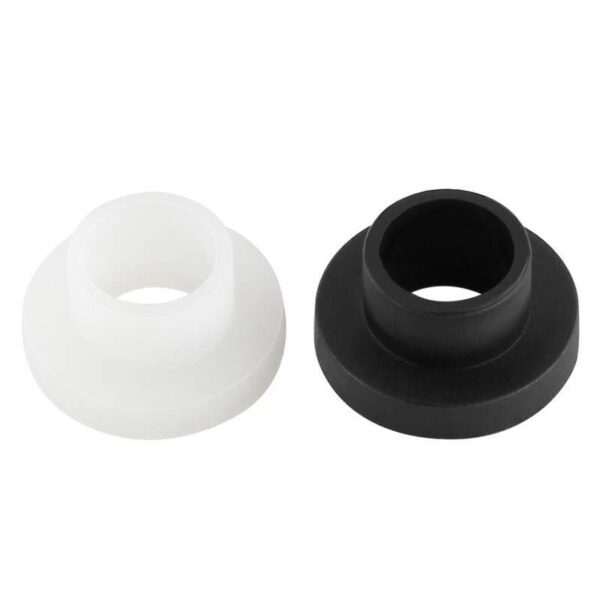
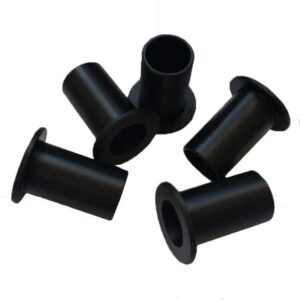
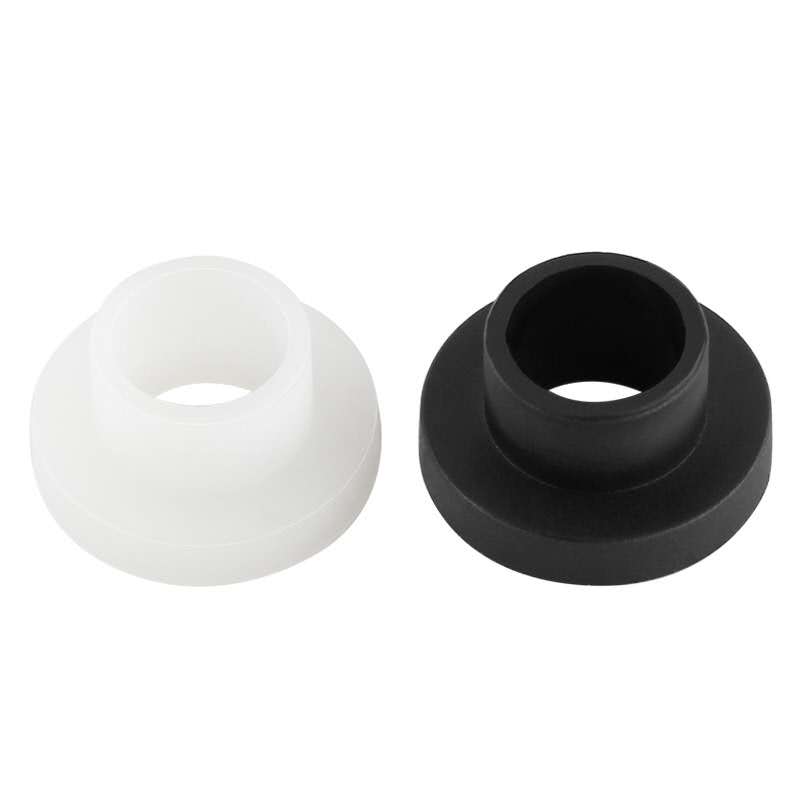
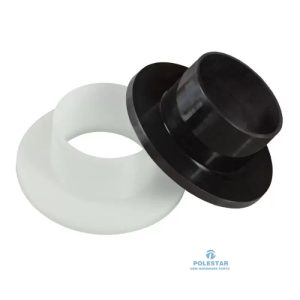
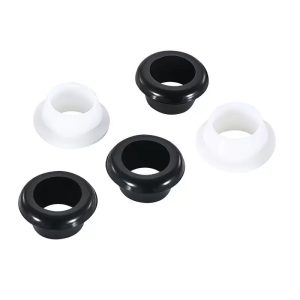
An Electrical Insulating Sleeve Washer, also commonly known as a Shoulder Washer, Insulation Bushing, or Step Washer, is a specialized, one-piece fastener component designed to create a complete electrical isolation barrier between a metal fastener (screw or bolt) and the assembly it secures .
Its distinctive feature is its stepped or “T-shaped” design, which integrates two functions into a single component:
The Sleeve (Shoulder/Step): A cylindrical tube that fits around the shaft of the screw, isolating it from the sides of the mounting hole.
The Washer (Flange): A flat, circular base that sits under the screw head or nut, isolating it from the surface of the component .
By creating this physical barrier, these washers prevent electrical current from traveling through the conductive fastener, thereby stopping short circuits. They also serve the secondary purpose of preventing galvanic corrosion, which can occur when dissimilar metals come into contact in the presence of an electrolyte .
Materials of Electrical Insulating Sleeve Washers
The choice of material is critical as it determines the washer’s insulating properties, temperature resistance, and mechanical strength. Common materials include:
Nylon 6/6 (PA66): The most versatile and widely used material. It offers good abrasion resistance, a low friction coefficient, high dielectric strength, and resistance to moisture, dirt, and most chemicals. It is suitable for a wide range of general-purpose applications, from PCBs to light-load bearings .
Polyphenylene Sulfide (PPS): A high-performance plastic, often glass-filled, used for applications requiring exposure to high temperatures. It offers excellent chemical resistance and maintains its properties in demanding environments .
PTFE (Polytetrafluoroethylene/Teflon): Known for its exceptional chemical resistance and very low friction. PTFE washers are ideal for high-friction or chemically aggressive environments .
Polysulfone (PSU): Offers high strength and transparency, with good dielectric strength, making it suitable for specialized applications .
Ceramic (Alumina, Zirconia): Used in extreme environments requiring outstanding high-temperature resistance, exceptional mechanical strength, and complete chemical inertness. They are common in heaters and high-power electronics .
Surface Finishes
As these are typically non-metallic components designed for insulation, traditional plating does not apply. However, they are available in different visual and compositional grades:
Natural (Virgin Material): The base color of the raw plastic (e.g., natural nylon, white PTFE).
Colored: Often used to indicate material grade or for specific industry requirements (e.g., black nylon may contain UV stabilizers or glass fill) .
Glass-Filled: The material itself is compounded with glass fibers to enhance mechanical strength and heat resistance. This is an internal property, not a coating .
Filled/Composite: Similar to glass-filled, materials may be combined with other compounds to achieve specific performance characteristics like flame retardancy.
Specifications
Electrical Insulating Sleeve Washers are defined by several key dimensional and performance parameters:
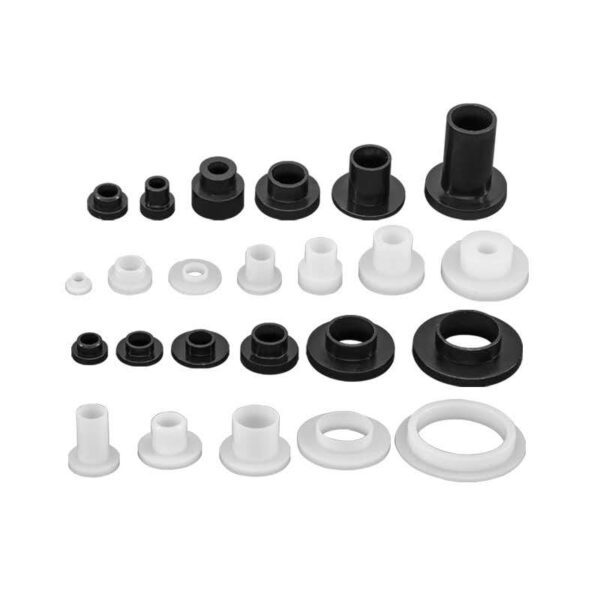
Shape: One-piece design featuring a cylindrical shoulder (sleeve) and a concentric flat flange (washer) .
Key Dimensions:
Inner Diameter (ID): The hole diameter, designed to accommodate a specific screw size (e.g., M3, M4, #6, 1/4″) .
Shoulder Diameter: The outer diameter of the sleeve that fits into the mounting hole.
Flange (Washer) Diameter: The outer diameter of the flat head.
Overall Height (Length): The total length of the shoulder, which determines the spacing or depth of insulation .
Performance Ratings:
Dielectric Strength: A measure of the material’s ability to withstand voltage without breaking down (e.g., 300-530 v/mm for various nylons and PPS) .
Flammability Rating: UL94 ratings such as V-2 or V-0, indicating the material’s resistance to burning .
Temperature Range: The operational temperature limits of the material (e.g., Nylon 6/6: -40°F to 185°F; PPS: -40°F to 428°F) .
Application Fields
Electrical Insulating Sleeve Washers are indispensable in any application where electricity and conductive components interact .
PCB (Printed Circuit Board) Mounting: Their most common use is to securely mount PCBs to metal chassis or enclosures. The sleeve isolates the screw from the plated hole walls, and the flange isolates the screw head from surface traces, preventing short circuits .
Power Electronics & Busbars: Used in the assembly of busbars, IGBTs, and other power modules. They ensure that mounting bolts do not become unintended conductors, which is critical for safety and function in switchgear and high-voltage equipment .
Automotive & White Goods: Found in motors, control units, and appliances to insulate electrical connections and prevent electrolytic corrosion between dissimilar metal parts .
Industrial Machinery: Used to insulate shafts, hinges, and pivots, acting as both a bearing surface and an electrical isolator in manufacturing equipment .
HVAC and Vending Machines: To safely secure electrical components and control panels, preventing current leakage .
An Excellent Case: Medium Voltage Switchgear Busbar Isolation
Scenario:
An engineer is designing a medium-voltage (MV) air-insulated switchgear. A critical part of the design is securing a set of copper busbars to a post insulator. The busbars carry high voltage and are covered with insulating heat-shrink material, except for the area around the mounting holes where the metal is exposed for connection. A conductive metal bolt must be used to clamp the busbars to the insulator with sufficient force.
The Challenge:
Using a standard metal bolt through the exposed mounting hole would create a direct electrical path from the live busbar, through the bolt, and into the post insulator and grounded frame, leading to a catastrophic short circuit or dangerous leakage current. Simply using a plastic bolt is not an option due to the high mechanical clamping force and torque required.
Why Electrical Insulating Sleeve Washers are the Perfect Solution :
A specialized isolation structure is employed using these washers.
Creating the Isolation Barrier:
An electrically insulating sleeve (made from a high-performance material like PPS or glass-filled polyester) is placed over the metal bolt’s shaft. This sleeve fits perfectly inside the busbar’s mounting hole, isolating the bolt from the conductive copper edge .
Two electrical insulating sleeve washers (also known as shoulder washers in this context) are used—one on each side of the busbar stack. The shoulder of each washer fits into the mounting hole, further surrounding the bolt sleeve, while the wide flange covers the area around the hole on the busbar surface .
Ensuring Complete Isolation:
The bolt, now with the sleeve and washers in place, passes through the assembly. The washers “sandwich” the busbar between them. Their flanges engage with the busbar surface around the hole, and their shoulders mate within the hole, ensuring that no part of the metal bolt is in contact with the conductive busbar .Maintaining Mechanical Integrity:
The assembly is then secured to the post insulator. A spring washer is often added under the bolt head to maintain clamping force during thermal expansion. The flat washers ensure the load is evenly distributed .
Result:
The use of the electrical insulating sleeve washers provides a robust, high-strength mechanical fastening solution that completely electrically isolates the live busbar from the mounting bolt and insulator. This design meets strict operational creepage and clearance requirements, prevents arcing and short circuits, and can even allow for a shorter, more cost-effective post insulator, saving space and material in the switchgear . This method ensures equipment safety and reliability in a critical power distribution application.


المراجعات
لا توجد مراجعات بعد.